
Integrated Reporting Framework
Access the Integrated Reporting Framework (International <IR> Framework) and supporting documents on applying integrated reporting Guiding Principles and Content Elements.

Information Papers
Access the IRC’s Information Papers on integrated reporting and integrated thinking.

FAQs
Find answers to frequently asked questions on integrated reporting and related topics.

Swipe or scroll to see more →
Integrated Reporting Framework
The Integrated Reporting Framework (Framework) is used in over 70 countries around the world to advance communication about value creation, preservation and erosion. The Framework is applicable to organisations across the private, public and non-profit sectors.
The updated version of the Framework was released in January 2021 (endorsed by the IRC in February 2021) and supersedes the original 2013 Framework (endorsed by the IRC in March 2014). Over time, the name has evolved from the International <IR> Framework to the simplified version of Integrated Reporting Framework.
The Framework is designed to be adaptable to local reporting contexts, and it serves as a global baseline. In South Africa, for instance, the Framework is applied in conjunction with the prevailing corporate governance code, the King VTM Code on Corporate Governance for South Africa, 2025 (King V)*. King V’s principles and recommended practices shape how organisations are governed and report. It includes the recommended practice to prepare an integrated report, at least annually, and recommends the use of the Integrated Reporting Framework.
* Copyright and trademarks are owned by the Institute of Directors in South Africa NPC and all of its rights are reserved.
The IFRS Foundation
The Integrated Reporting Framework is presently under the guardianship of the IFRS Foundation.
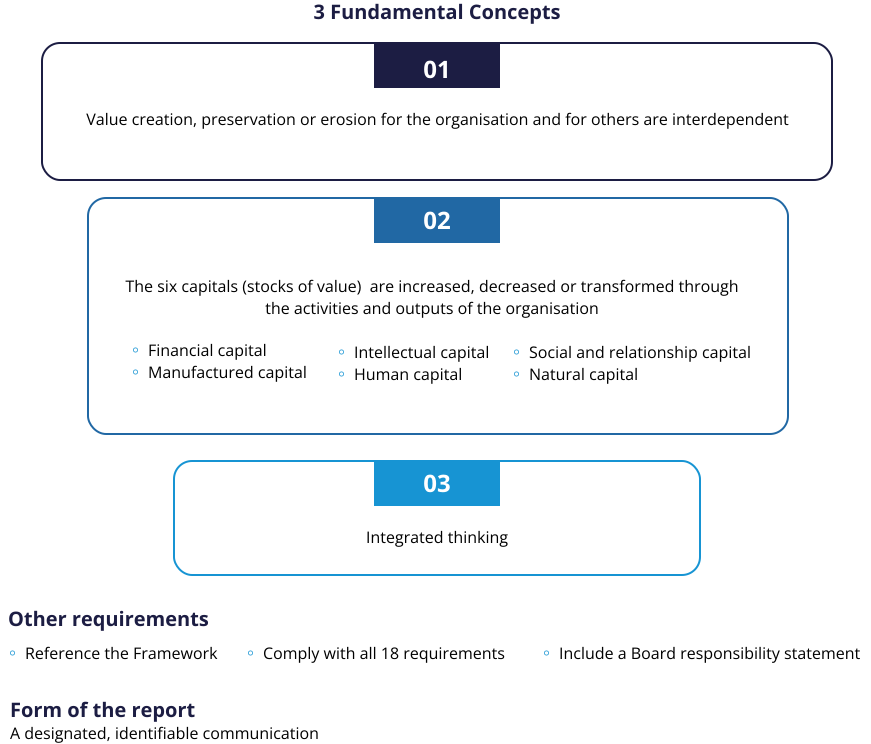
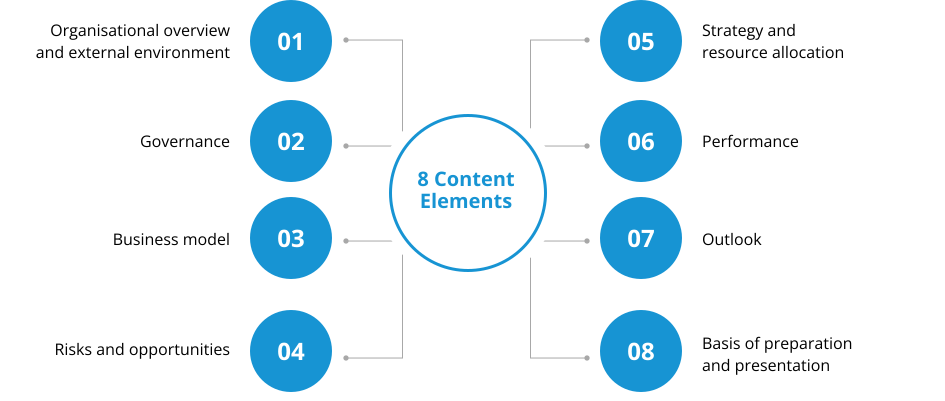
The Integrated Reporting Framework is used to prepare and present an integrated report. It comprises 18 requirements that should be met in the content of a report.
Information Papers and FAQs
Information Papers
The IRC’s Integrated Thinking: An Information Paper
We issued our Information Paper on Integrated Thinking which is a useful guide for companies and their boards and executives on applying integrated thinking. It covers the benefits, the challenges and practical key considerations on implementation.
Achieving a concise integrated report (volume 3/3)
This Paper explores practical considerations for achieving a concise integrated report. It completes a trilogy of Papers that offer solutions to increasingly complex and voluminous reporting requirements.
Integrated reporting and using a layering approach to sustainability reporting (volume 2/3)
This Paper provides practical considerations for applying a layering approach to sustainability reporting in the context of governance, integrated thinking and the integrated report.
A global comprehensive corporate reporting system (volume 1/3)
This Paper considers different approaches to developing a corporate reporting suite for comprehensive reporting, positioning the integrated report as the overall report.
Aligning internal and external integrated reporting
This Paper was developed to assist organisations to better align their internal reporting with their external reporting, specifically the annual integrated report.
Disclosure of governance information in the integrated report (updated)
This Paper can help organisations in determining governance disclosures in the integrated report. It was updated for changes to the International Framework and outlines some of the processes involved in preparing an integrated report.
Delivering a meaningful and concise integrated report
This Paper offers practical suggestions for delivering a meaningful and concise integrated report.
Reporting on outlook in the integrated report
This Paper is aimed at report preparers, as well as executives and members of the governing body who are responsible for guiding and approving the integrated report. It will also help users of reports to better understand information on outlook.
Achieving balance in the integrated report
This Paper discusses the role of the governing body, the meaning of balanced reporting, challenges and weaknesses, and lists key considerations in achieving a balanced integrated report.
Preparing an integrated report – a starter’s guide (updated)
This Paper offers practical suggestions for preparing an integrated report. It is aligned with King IV and presents updated examples five years after publication of the International Framework.
Disclosure of performance against strategic objectives
This Paper highlights the importance of providing a balanced disclosure of performance by applying the Guiding Principles of the International Framework. It looks at the challenges organisations may face, and key considerations with examples from reports of South African organisations.
Reporting on outcomes
This Paper is aimed at report preparers, as well as executives and board members responsible for guiding and approving the integrated report. It aims to improve understanding of what ‘outcomes’ mean, and offers some considerations for communicating outcomes in an integrated report.
Frequently asked questions (FAQs)
Reporting on the Sustainable Development Goals (SDGs) in the integrated report
The Octopus Model (how the integrated report fits into the corporate reporting suite)
Getting started
If you are just setting out on your integrated reporting journey, here are some useful documents to help you on your way.
The Integrated Reporting Framework defines an integrated report as:
“A concise communication about how an organisation’s strategy, governance, performance and prospects, in the context of its external environment, lead to the creation of value over the short, medium and long term.”
An integrated report is a concise yet complete report of business-critical information that shows how an organisation creates, preserves and erodes value. This is assessed across the six forms of capital that the organisation uses and affects, over the short, medium and long term, through its business activities and the delivery of its products and services.
The integrated report draws on information contained in other subject-specific reports, such as the annual financial statements, sustainability report, other reports and online disclosures.
The IRC’s library of Information Papers and FAQs are useful resources for exploring specific topics related to integrated reporting.
To understand how the integrated report relates to the sustainability report and other reports, see the three IRC Information Papers, A Comprehensive Global Corporate Reporting System, Integrated Reporting and Using an Approach to Layering Approach to Sustainability Reporting and Achieving a Concise Integrated Report.
The award-winning reports of the two integrated reporting award programmes in South Africa can provide examples of integrated reporting in practice.
You can also join our free IRC Network to be on our mailing list for our technical publications and join the free live webcast of our Annual Conferences to keep up to date with latest developments.
After reading the Integrated Reporting Framework, we suggest the following essential reading for new reporters:
Sector-specific resources
Retirement funds in South Africa have a particular mandate to invest for long-term sustainability. Regulations (including those issued by the Financial Sector Conduct Authority, impose duties on the trustees of retirement funds to invest responsibly. The integrated report, prepared in accordance with the Integrated Reporting Framework, is well placed for retirement funds to explain their long-term value-creation process.

Batseta, the Council of Retirement Funds for South Africa, focuses on the interests of principal officers, trustees and fund fiduciaries within the retirement industry in South Africa. Batseta is an organisational member of the IRC of South Africa.
The King V guidance note for retirement funds provides a detailed interpretation of the Code as it applies to funds, outlining key nuances, points of emphasis and legislative considerations that may affect the practical implementation of each King V principle.
Other resources:
- Accounting for Sustainability: Using scenario analysis for future resilience – a practical guide (2026)
- Accounting for Sustainability: The sustainability toolkit for pension chairs and trustees
- Tomorrow’s company: Achieving long-term financial returns: a guide for pension fund trustees (2014)
The Public Finance Management Act (PFMA) and the Municipal Finance Management Act (MFMA) align with the principles of the Integrated Reporting Framework. Both mandate a holistic, multi-dimensional approach to public sector accountability.
The PFMA requires comprehensive annual reports that increasingly combine financial and non-financial performance data, a practice reinforced by King V, which drives integrated thinking in South Africa.
The MFMA explicitly links municipal strategic plans (integrated development plans) to budgets and performance reporting, embedding integrated planning into its legislative cycle.
Together, both Acts cultivate transparency and accountability by compelling entities to present a complete view of their performance, sustainability, and value creation. These are core objectives of the Integrated Reporting Framework.
Older resources
- IIRC and CIPFA: Focusing on value creation in the public sector (2016)
- KPMG: Applying Integrated Reporting principles in the public sector (2012)
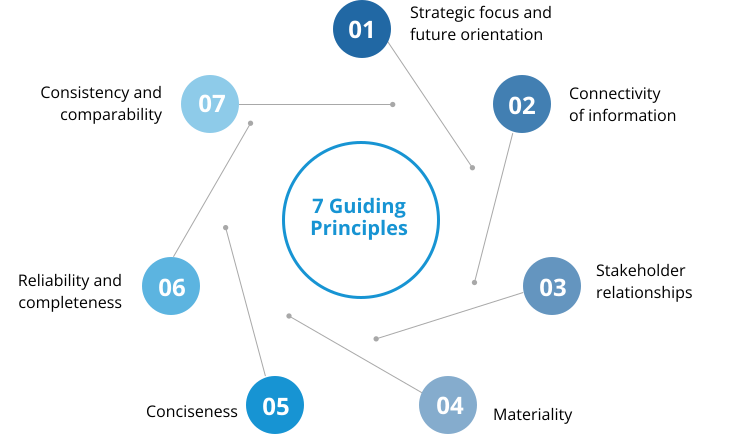
Integrated reporting and integrated thinking are concepts that can apply to all companies, regardless of size. The Guiding Principles of integrated reporting contained in the Integrated Reporting Framework can be applied across varying scales of businesses, from large multinationals to small, more locally focused entities.
Similarly, the benefits of integrated reporting, which include the availability of decision-useful information and longer term thinking to the organisation itself, can be realised by SMEs in today’s world of connectivity where most things are connected.
Older resources
- IFAC: Benefits of integrated reporting for small businesses and not for profit organizations (2019)
- Italian Network for Business Reporting: Integrated reporting for SMEs, implementation guidance (2018)
- ACCA: How vision and strategy help small businesses succeed: Governance needs of SMEs (2018)
- IFAC and the IIRC: Creating value for SMEs through integrated thinking, the benefits of integrated reporting (2017)
Some NPOs in South Africa have been preparing integrated reports since 2010 on the King Code’s recommendation to prepare an integrated report. NPOs in South Africa follow the King Code voluntarily in the interests of good governance, rather than by any regulation.
The benefits of integrating reporting, among others, are good governance and a funding tool for both reporting to current funders and explaining the organisation and its outcomes to future funders. See some of the NPOs that have been recognised for their reporting under the CGISA/JSE integrated reporting awards.
Older resource
- IFAC: Benefits of integrated reporting for small businesses and not for profit organizations (2019)
- Italian Network for Business Reporting: Integrated reporting for SMEs, implementation guidance (2018)
- ACCA: How vision and strategy help small businesses succeed: Governance needs of SMEs (2018)
- IFAC and the IIRC: Creating value for SMEs through integrated thinking, the benefits of integrated reporting (2017)
South Africa’s Second Code for Responsible Investing (CRISA 2) was released in September 2022, effective 1 February 2023. It builds on the 2011 Code and sets out five voluntary principles for responsible investment and stewardship.
The principles can be applied flexibly by asset owners, asset managers and service providers, depending on their circumstances. Other organisations involved in the investment value chain are also encouraged to apply CRISA 2.
CRISA 2 recommends that investment organisations pursue integrated reporting to provide a holistic overview of their investment strategy and philosophy, investment arrangements and activities as well as their progress and outcomes achieved. It also considers the Guiding Principles of the Integrated Reporting Framework (particularly as it relates to reliability, completeness, consistency and comparability) as good practice to enhance the quality of reporting.
Integrated reporting benefits all stakeholders by explaining how an organisation creates value over time. It gives investors and other stakeholders clearer insight into the organisation’s risks, opportunities, dependencies and long-term value creation potential. It also shows how the organisation uses and affects the six capitals, and how these outcomes may influence future performance. Therefore, investors should also assess the quality of the integrated reports published by the companies in which they invest.
Other resources

Since 2006, the PRI acts in the long-term interests of its more than 5 000 signatories, of the financial markets and economies in which they operate and ultimately of the environment and society as a whole.

ICGN has been advancing high standards of corporate governance and investor stewardship worldwide since 1995. Their network includes the world’s largest public pension funds and asset managers.
INTEGRATED THINKING
Integrated reporting is founded on integrated thinking.
Integrated thinking is the consideration of the six capitals (identified in the Integrated Reporting Framework) in an organisation’s governance, strategy, decision-making and daily operations. Integrated thinking should be embedded throughout an organisation and is fundamental to effective governance, long-term value creation and integrated reporting.
Integrated thinking is defined in the Integrated Reporting Framework as “the active consideration by an organisation of the relationships between its various operating and functional units and the capitals that the organisation uses or affects. It leads to integrated decision-making and actions that consider the creation, preservation and erosion of value over the short, medium and long term.”
Integrated thinking brings all perspectives together into one integrated framework that is centred around long-term value creation. It means thinking and acting in a manner that considers broader organisational, economic, societal and environmental value creation and impacts in the short, medium and long term.
The IRC’s Integrated Thinking: An Information Paper is a useful guide for companies and their boards and executives on applying integrated thinking. It covers the benefits, the challenges and practical key considerations on implementation. The Paper draws on the insights and experience of leading South African organisations and includes case studies from Redefine Properties, Nedbank and Vodacom.
Integrated thinking as a concept also features in the King Codes of Corporate Governance. The King V Foundational Concepts has a very useful explanation of integrated thinking and its relation to governance.
The importance of integrated thinking underlying integrated reporting and the integrated report has seen it covered in many of the IRC Information Papers.
Resources
- IFRS: Transition to integrated thinking: a guide to getting started (2022)
- IFRS: Integrated thinking principles v1.0 (2022)
- IFRS: Integrated thinking case studies (2021 to 2022)
Older resources:
- Association-Black Sun-IIRC: Purpose Beyond Profit: The Value of Value (2018)
- A Blueprint for Better Business: How can investors identify purpose-led companies (2018)
- SAICA: Integrated thinking, an exploratory survey (2015)
SUSTAINABILITY REPORTING
We support preparers, users, members and the broader reporting community to understand and respond to developments in corporate reporting. Our primary focus is the integrated report applying the Integrated Reporting Framework within the broader reporting landscape including evolving local and international sustainability and governance requirements and guidance. Specifically, the developments in regulated sustainability reporting and the need to use multiple reporting standards are considered in the context of their links to the integrated report and the overall corporate reporting suite.
As a result, many of our Information Papers, FAQs and comment submissions touch on sustainability-related reporting standards and frameworks.
Information Papers
Achieving a concise integrated report (volume 3/3)
This Paper explores practical considerations for achieving a concise integrated report. It completes a trilogy of Papers that offer solutions to increasingly complex and voluminous reporting requirements.
Integrated reporting and using a layering approach to sustainability reporting (volume 2/3)
This Paper provides practical considerations for applying a layering approach to sustainability reporting in the context of governance, integrated thinking and the integrated report.
A global comprehensive corporate reporting system (volume 1/3)
This Paper considers different approaches to developing a corporate reporting suite for comprehensive reporting, positioning the integrated report as the overall report.
Reporting on outcomes
This Paper is aimed at report preparers, as well as executives and board members responsible for guiding and approving the integrated report. It aims to improve understanding of what ‘outcomes’ mean, and offers some considerations for communicating outcomes in an integrated report.
Frequently asked questions
ASSURANCE
Assurance over sustainability reporting is increasingly important and is set to become more so within mandatory sustainability reporting. Developments in assurance standards continue to shape how organisations enhance the credibility and reliability of corporate reporting and sustainability-related disclosures.
On 29 January 2026, the Independent Regulatory Board for Auditors’ (IRBA) board approved the International Standard on Sustainability Assurance (ISSA) 5000, General Requirements for Sustainability Assurance Engagements, for adoption, issue and prescription for use by auditors in South Africa.
The approval includes the conforming and consequential amendments to other international standards. This follows the International Auditing and Assurance Standards Board’s (IAASB) release of ISSA 5000 in November 2024.